
Your Passport Is a Wealth Tool, Not Just a Travel Document

In a second passport strategy, the passport is not the product — it is the outcome. For investors exploring citizenship by investment, that distinction matters because a passport can do more than widen travel options; it can reflect access to another legal system, another set of rules, and another layer of optionality for a family or business owner. The Henley Passport Index is updated monthly, uses IATA-based data, and covers 199 passports across 227 destinations, which is a useful reminder that mobility is dynamic, not permanent. In 2025, Henley’s own reporting showed Singapore and Japan at the top of the table while the U.S. had slipped to ninth, proving that passport value can move quickly even when a country’s reputation seems stable. ([henleyglobal.com](https://www.henleyglobal.com/passport-index/methodology))

Why Most People Choose the Wrong Second Passport Strategy

The ranking trap

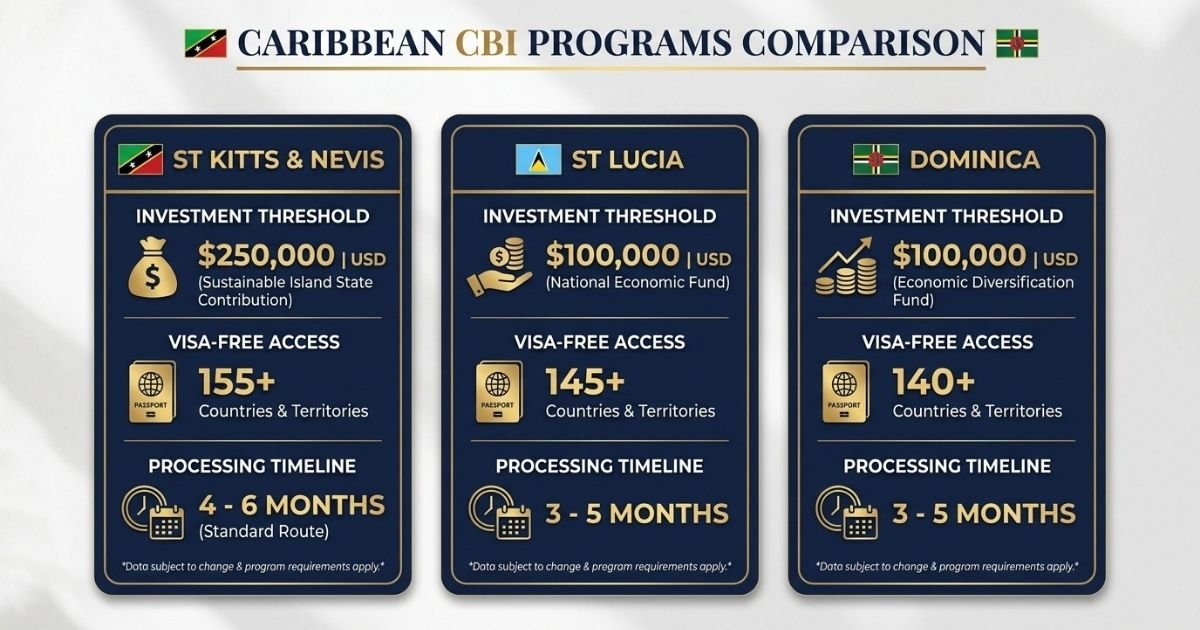
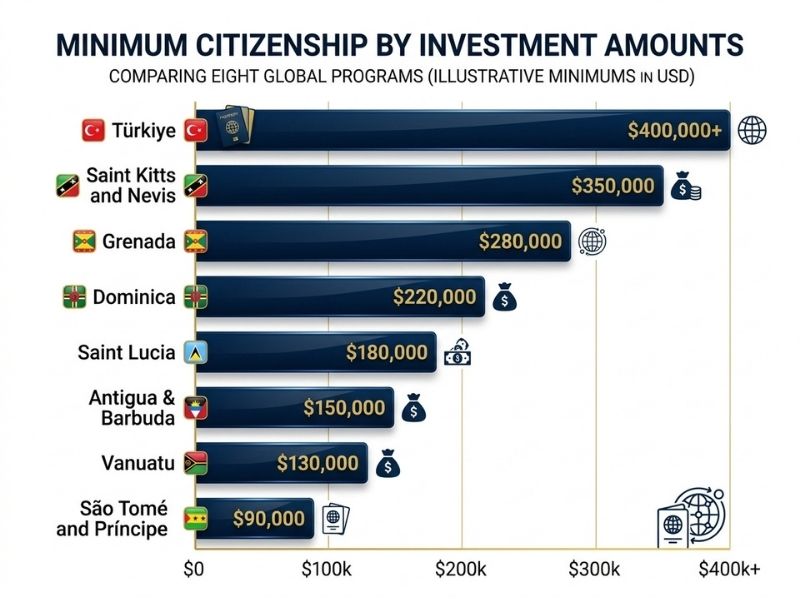
Most investors begin with the easiest number to compare: visa-free destinations. That is understandable, but it is also where many decisions go wrong. A passport can look impressive on a ranking page and still be the wrong fit if your real objective is tax flexibility, family continuity, banking confidence, or a politically stable base for future decisions. In practice, people often confuse a headline metric with a complete answer. Henley’s methodology shows why that is risky: the index relies on IATA data, cross-checks governments and public sources, and updates throughout the year, which means the score you saw last month can shift without warning. ([henleyglobal.com](https://www.henleyglobal.com/passport-index/methodology))

Another common mistake is treating speed as the same thing as value. A fast passport or residence route can be useful, but only if the legal package behind it supports your broader plan. Investors sometimes buy what is popular, not what is aligned. They want the passport their peers discuss, the program with the loudest marketing, or the shortest timeline. But the real question is whether the jurisdiction fits your balance sheet, your reporting profile, and your family’s future needs. A passport that solves only one problem can create three more.

  • Speed-first thinking: Some buyers only want the quickest route. Speed is useful, but only if the country, due diligence process, and long-term rights make sense.
  • Ranking-first thinking: A high visa-free count is attractive, yet it may not address tax exposure, succession planning, or where you actually spend time.
  • Trend-chasing: Following the latest online recommendation can be expensive if the underlying program does not fit your family or business model.

That is why the most expensive mistake is often not paying too much; it is paying for the wrong objective.

The Difference Between Optimization and Alignment

Optimization is tactical

Optimization asks, “How do I maximize one variable?” It focuses on the immediate win: faster issuance, a larger travel list, or a lower minimum outlay. There is nothing wrong with that instinct. In fact, investors should care about cost, speed, and convenience. But optimization alone can produce a brittle outcome if the status does not work in the rest of your life.

Alignment is strategic

Alignment asks a different question: “Does this option fit my long-term structure?” A strong second passport strategy should support where you live, where you bank, how you invest, and what your family may need five or ten years from now. That is why the cheapest route is not always the best route, and the fastest route is not always the safest route. Alignment is about coherence. It is about choosing a legal status that strengthens your position instead of simply adding a document to your portfolio.

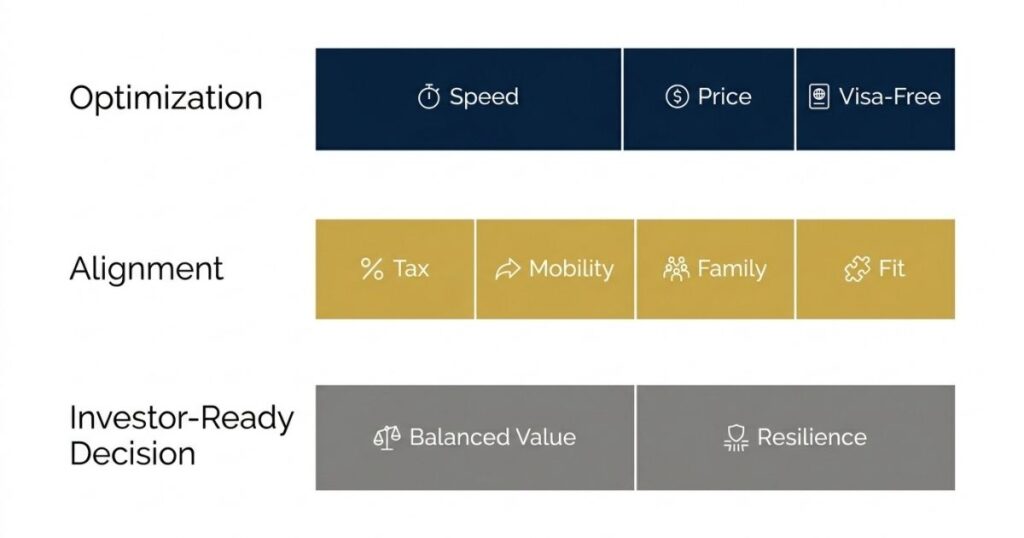
Lens What it prioritizes Hidden risk Better question
Optimization Speed, price, or visa-free reach Shallow fit and future regret What single metric am I chasing?
Alignment Tax, mobility, family, and jurisdictional fit Requires more analysis upfront Will this still make sense in 5 years?
Investor-ready decision A balanced mix of value and resilience Needs expert input Does this solve the real problem?

Use the chart above to stress-test every option against your real objectives. If a passport only improves one KPI while weakening three others, it is usually a sign that you are buying a headline, not a solution.

What a Legal Relationship With a Country Really Means for Investors

Rights, duties, and optionality

A passport is useful because it sits inside a legal relationship. It can support travel, but it can also influence the way you interact with a country’s systems over time. That may include residence options, family planning, access to local institutions, and the credibility that comes with being linked to a stable jurisdiction. This is why investors should not confuse a document with the deeper system around it. The document matters, but the legal status behind it matters more.

The UAE Government Platform, for example, lists Golden Visa routes that include a minimum capital of AED 2 million. That single figure is useful because it shows how long-term residence is anchored in a defined legal and financial threshold rather than a simple travel perk. In other words, the value is not just mobility. It is a package of rights, obligations, and planning choices that investors should assess carefully. ([u.ae](https://u.ae/en/information-and-services/visa-and-emirates-id/residence-visas/golden-visa?utm_source=openai))

Residence is not citizenship

One reason investors get confused is that residence and citizenship are often discussed in the same conversation, even though they serve different purposes. Residence can be a powerful entry point, especially if you want flexibility without changing nationality. Citizenship is deeper: it can create a more enduring bond with the state and, in some cases, broader family benefits. A second passport strategy should therefore begin by asking whether you need temporary access, long-term residence, or full citizenship — because each answer leads to a different legal and financial path.

  • Mobility: What countries do you need to enter more easily?
  • Structure: Do you need residence, citizenship, or both?
  • Continuity: How will the status affect your spouse, children, and succession planning?
  • Compliance: What reporting, tax, or documentation duties come with the route?

Henley also reminds users that visa information should be verified before travel arrangements are made, which is exactly the discipline investors should apply before committing capital. If the rules can change for travel, they can also change for residency and citizenship planning. ([henleyglobal.com](https://www.henleyglobal.com/passport-index/methodology))

How Investors Should Choose the Right Path

A practical investor checklist

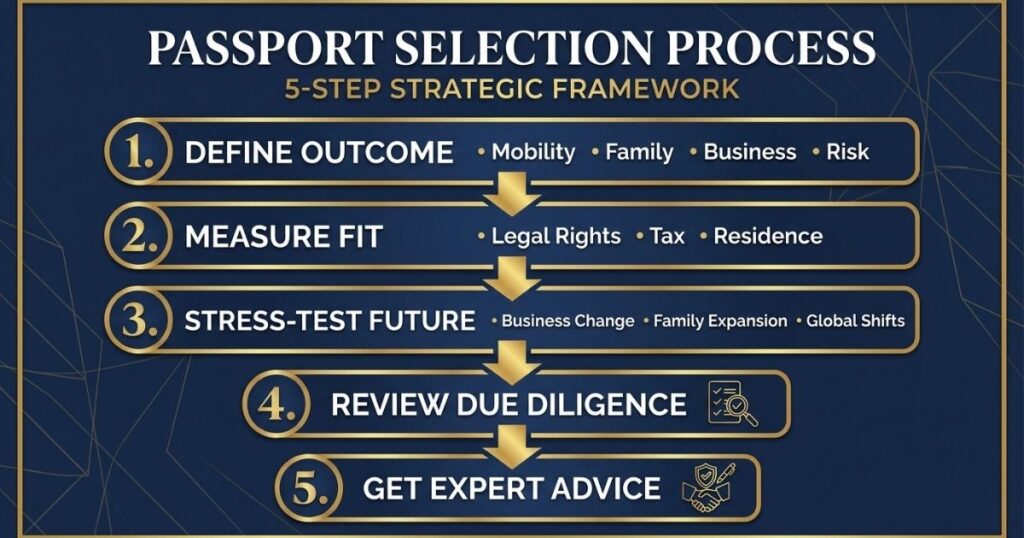
For most high-net-worth families, the right process is simple but rigorous: define the objective, compare the route, and test the consequences before you apply. Start by deciding whether you need citizenship, residence, or a staged plan that uses both. Then compare jurisdictions on more than speed. Ask what changes in your tax exposure, how the legal status fits your banking footprint, and whether the country is a place you would actually want to live, invest, or pass on to the next generation.

  1. Define the outcome. Are you solving mobility, family security, business access, or jurisdictional risk?
  2. Measure the fit. Compare the legal rights, residence rules, and tax implications of each option.
  3. Stress-test the future. Ask what happens if your business changes, your family expands, or global rules shift.
  4. Review the due diligence burden. A credible program should be transparent about documentation, checks, and timing.
  5. Get advice before you commit. The right structuring can save more than the wrong headline ever could.

If you want to compare routes, start with our citizenship programs overview, then read second passport benefits and our investment migration services page. If a Caribbean route is on your shortlist, our Caribbean citizenship guide is a useful next step. When you are ready, contact us for a tailored discussion.

The best passport decisions are not made by chasing the loudest marketing claim. They are made by aligning rights, risk, and capital with the way you actually live. That is the real point of a second passport strategy: better structure, better optionality, and fewer surprises.

Information accurate as of May 2026. Program rules change frequently — contact Adeniyi Associates for current guidance.

2026 Caribbean CBI: Updated Due‑Diligence Checklist for Nigerian Applicants Brand: Adeniyi Associates

2026 Caribbean CBI: Updated Due‑Diligence Checklist for Nigerian Applicants

If you’re a Nigerian applicant considering Caribbean Citizenship by Investment (CBI) in 2025–2026, you’ll quickly realize the biggest hurdle isn’t only the investment—it’s documentation quality and due diligence readiness.

This is a document-first due diligence checklist, designed for Nigerians (and helpful for GCC-based Africans in UAE/Saudi/Qatar). Use it to reduce delays, avoid rejection risks, and prepare a clean evidence package from day one.


1) Who this is for (Nigerians + GCC-based Africans) and what changed in 2025–2026

This guide is for you if:

  • You’re Nigerian (main audience)
  • You may be living in the GCC (UAE / Saudi / Qatar) but still need Nigerian background documents and a full traceable evidence trail
  • You want a clear plan to prepare for due diligence—especially the parts applicants usually underestimate

What commonly changed in practice (2025–2026):

  • More evidence is expected to be traceable, consistent, and verifiable
  • Reviewers focus harder on Source of Funds (SoF) credibility and supporting paperwork quality
  • Beneficial ownership (UBO) clarity is becoming non-negotiable

Exact requirements can vary by program and holder profile—so always document to the highest standard possible.


2) Key regulatory shifts to know (enhanced due diligence, AML/PEP focus, tightened KYC timelines)

While program rules can differ, due diligence commonly emphasizes:

  • Enhanced due diligence: When details are unclear, mismatched, or missing, reviewers spend more time requesting clarifications.
  • AML/PEP focus: Your background, transaction flow, and ownership structure may be screened more thoroughly.
  • Tightened KYC timelines: Expect faster escalations when documents are incomplete or not properly certified/translated.

Practical takeaway: If you can’t support a claim with documents, assume it will trigger questions.


3) Core documents to prepare now: bank statements, source-of-funds trail, tax returns, corporate records

Start building your “evidence backbone” early. Gather documents in a way that they align with each other:

Financial / SoF evidence (core)

  • Bank statements (covering the relevant period requested)
  • Source-of-funds trail (how money was earned/accumulated and moved)
  • Tax returns or tax certificates (where applicable/available for your profile)
  • Proof of income (if you’re using salary/business income—depends on your situation)
  • Corporate records and financials (only if your SoF comes from business ownership or business activity)

Why this section matters

Many applicants delay because they collect bank statements but don’t also prepare:

  • the story of money flow
  • the supporting documents that explain that flow
  • the cross-consistency between statements and explanations

4) Beneficial ownership & UBO checks: what to disclose and how to document ownership cleanly

Due diligence may require clarity on UBO (beneficial ownership)—who truly owns or controls assets/structures.

Prepare:

  • A clear UBO disclosure (who benefits / who controls, not only who is listed)
  • Corporate documents supporting ownership/control (as applicable)
  • Documents that match across:
    • application details
    • bank documentation
    • corporate records
    • any explanations provided

Common risk: ownership info is “technically available” but not cleanly documented in a way reviewers can verify. That’s a delay trigger.

Practical tip: Create a single timeline that shows:

  • ownership changes (if any)
  • role changes (director/shareholder/manager)
  • when income/business activity started or changed

5) Police clearance, litigation history, and PEP screening — practical tips to reduce flags

These elements are commonly reviewed as part of background checks.

Prepare:

  • Police clearance certificates for you (and household members, as required)
  • Litigation history disclosures (where applicable)
  • PEP screening inputs (handled through your application process, but you must ensure facts are consistent)

Tips to reduce preventable issues

  • Use consistent name spelling across all documents
  • Ensure documents are properly issued and legible
  • Provide accurate details—don’t “guess” answers you can’t support

Remember: The goal is not to avoid scrutiny—it’s to avoid avoidable inconsistencies.


6) Family inclusion checklist: spouse, minor children, dependent parents — required proofs and timing

If you include family members, start early because family documents often take longer.

Common items include:

  • Marriage certificate (for spouse inclusion)
  • Birth certificates (for children/dependents as applicable)
  • Identity/passport pages
  • Supporting proof of dependency (for dependent parents/guardians, if required)
  • Any program-specific forms or declarations

Timing advice (important)

Plan certification, translation, and document gathering as parallel streams—not last-minute tasks.


7) Typical queries that cause delays and rejections (incomplete SofF, unverifiable income, missing corporate attestations)

Here are the usual causes of delays (even when money is available):

  • Incomplete Source of Funds (SoF): missing periods, missing supporting pages, unclear money origin.
  • Unverifiable income: income claimed but not matched by evidence (payslips, tax proof, contracts, or business records).
  • Corporate attestation gaps: corporate documents exist but don’t clearly support ownership/control or income flow.
  • Mismatched facts across documents: dates, amounts, names, or roles that don’t align.
  • Weak explanations: applicants provide a reason but can’t support it with traceable paperwork.

Checklist mindset: every claim must connect to a document.


8) Practical timeline & cost expectations (where delays commonly appear) and a 30/90-day prep plan

Where delays commonly appear

  • Waiting on certified copies / translations
  • Police clearance processing timelines
  • Corporate document retrieval and attestation
  • Complex SoF explanation building (bank statements → story → proofs)

30/90-day prep plan (practical)

Next 30 days (setup + evidence gathering):

  • Identify your likely SoF type (salary, business, mixed)
  • Collect initial bank statements + early SoF documents
  • List every missing document (including certifications/translations)
  • Begin police clearance process planning (where applicable)
  • Build your UBO/ownership outline if business-related

Next 90 days (verification + submission readiness):

  • Reconcile bank statements with the SoF story
  • Confirm corporate/ownership documents match the UBO disclosure
  • Prepare family documents if applicable
  • Final cross-check for consistency:
    • names
    • dates
    • amounts
    • roles
  • Prepare a clean, organized evidence pack

Cost expectations (how to think about it)

CBI costs vary by program and applicant profile. Due diligence readiness may increase “prep cost” because you’ll need:

  • certified copies
  • translations
  • documentary verification and legal support

The best way to know your likely cost range is after a document review of your evidence stack.


UAE Golden Visa 2026: Investor Guide to Eligibility

UAE Golden Visa – What Investors Need to Know in 2026

UAE Golden Visa rules in 2026 continue to attract investors and skilled professionals who want long-term residency in one of the world’s most dynamic business hubs. For readers comparing residency and citizenship pathways, the UAE stands out for its speed, stability, and family-friendly structure.

The core appeal remains the ten-year renewable residence model, with no minimum stay requirement under the post-2022 framework. Official-facing summaries and recent research continue to show that investors can qualify through property, business, or talent-based routes, while compliance standards have become more rigorous across screening, source-of-funds verification, and document review. That is important for anyone evaluating citizenship by investment alternatives, because the UAE is a residence-first option rather than a second passport program. Verified overviews from investment-migration analysts and official program explanations consistently show the property route anchored at AED 2 million in qualifying real estate, with retention conditions and mortgage limits applied during approval.

For families and entrepreneurs, the biggest advantage is flexibility. The visa can support spouses and dependents, and it often fits into broader planning that includes second passport benefits, tax planning, and cross-border mobility. In practice, this means the UAE Golden Visa is less about nationality and more about durable legal residence backed by real economic contribution.

UAE Golden Visa Eligibility Shifts

In 2026, the headline change is not a brand-new program but tighter interpretation of existing pathways. The property-linked route remains the most visible for investors: qualifying real estate must meet the minimum investment threshold, and applicants should expect proof of ownership, financing structure, and title-status documentation. Industry reporting in April 2026 continued to confirm that the AED 2 million benchmark remains in place, while official program summaries emphasize ongoing proof of compliance and retention.

Professionals qualify through recognized expertise, employment status, and, in some categories, salary thresholds and accreditation. This is where the visa has evolved: authorities increasingly look for genuine substance rather than paperwork-only applications. In other words, the UAE Golden Visa rewards credible investors and established professionals, not just applicants with capital on paper.

UAE Golden Visa Investment Requirements

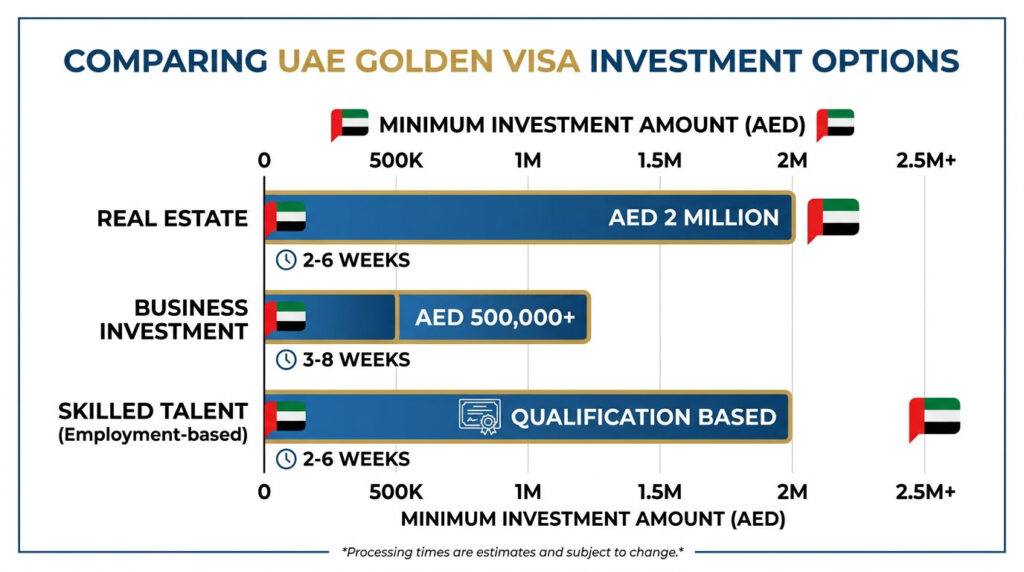
Applicants considering the investor route should review the qualifying investment structure carefully. The following table summarizes the most widely referenced criteria for 2026, based on program guidance and current industry verification.

Investment Option Minimum Amount Processing Time Key Benefits
Real Estate AED 2,000,000 2-6 weeks Long-term residence, family inclusion, flexible travel
Business Investment AED 500,000+ 3-8 weeks Entrepreneur pathway, UAE market access, renewal potential
Skilled Talent Route Employment-based 2-6 weeks Residency for specialists, researchers, and professionals

How to Obtain UAE Golden Visa Status

Applicants should work with a licensed adviser and align the application with the correct route from the start. Our investment migration services help investors avoid costly mistakes, especially where property title, mortgage ratios, or employment contracts affect eligibility. The UAE continues to prioritize clean documentation, verifiable income or asset source, and a credible residency purpose.

The strongest applications are those that clearly prove eligibility, ownership, and compliance from day one.

Step-by-Step Process

  1. Step 1: Choose the correct route: property, business, or talent. This matters because the supporting documents differ substantially. A property investor needs title evidence and payment records, while a professional needs employment, qualifications, and sometimes salary documentation. Starting with the wrong route slows the case and can trigger additional review.
  2. Step 2: Prepare source-of-funds and due-diligence files. Expect enhanced anti-money-laundering checks, police clearance, biometric capture where required, and verification of any beneficial ownership links. In 2026, this is no longer a back-office formality; it is a central part of the approval process.
  3. Step 3: Submit the residency file and confirm the investment structure. Property cases should show the approved valuation and ownership status. If financing is involved, the loan terms must fit the permitted cap and the applicant should keep records ready for audit or follow-up.
  4. Step 4: Track approval and issuance. Processing is often faster than most residency systems, but timing depends on nationality, file quality, and verification depth. Recent summaries suggest approvals can move in weeks rather than months when documents are complete.
  5. Step 5: Maintain compliance after approval. Renewals depend on keeping the qualifying investment, employment, or professional status active. Changes in ownership, employment, or residency circumstances should be reported promptly to reduce cancellation risk.

Benefits of the UAE Golden Visa

  • Global Mobility: The UAE Golden Visa supports a stable residence base in a major international hub with excellent flight connectivity, business infrastructure, and family access. For many clients, this becomes the anchor point for wider travel planning and a practical complement to second passport strategies. It is especially valuable for entrepreneurs who need long-term certainty without constant renewals.
  • Tax Optimization: Although tax outcomes depend on personal circumstances, the UAE is widely used by internationally mobile families seeking a more efficient environment. The visa can support legitimate relocation planning, but investors should always coordinate residence status with professional tax advice before making any move.
  • Business Opportunities: Residence in the UAE can improve access to banking, company formation, trade corridors, and regional clients. For investors comparing citizenship by investment with residency, this is one of the strongest business-first advantages of the UAE model. It is not citizenship, but it can be commercially powerful.
  • Family Security: The structure often allows spouse and dependent inclusion, which makes it attractive for families that want educational continuity, lifestyle stability, and a long-term regional base. The residence model is especially useful for families who value predictability but do not need immediate nationality change.


Key Considerations for Applicants

Applicants should be realistic about compliance. Recent reporting indicates that UAE authorities are willing to tighten enforcement where risk factors appear, including questionable ownership structures, weak documentation, or nationality-sensitive security concerns. That makes due diligence more important than marketing claims. Official and industry sources both show that the visa is still accessible, but it is increasingly compliance-led.

Common Misconceptions

Myth 1: The UAE Golden Visa is automatic if you buy any property. – Reality: The property must meet the qualifying threshold and documentation standards.

Myth 2: It is the same as citizenship by investment. – Reality: It is a renewable residence permit, not a passport or nationality grant.

Myth 3: Once approved, compliance no longer matters. – Reality: Renewals and continued validity depend on maintaining the qualifying conditions.

Expert Tips for a Stronger Application

First, confirm the route before you buy property or sign employment papers. Second, gather clean bank statements and source-of-wealth records early. Third, use only professional valuation and title documents. Fourth, plan family applications together to avoid timing gaps. Fifth, keep a compliance file for renewal. Sixth, obtain tax advice before relocating.

Recent Updates (As of April 2026)

Recent April 2026 reporting confirms continued demand for the UAE Golden Visa and reinforces that the property threshold remains at AED 2 million. Industry news also highlights rising attention to revocation risk, enhanced screening, and broader monitoring of high-risk cases. That means the key trend for 2026 is not easier access; it is smarter access.

Frequently Asked Questions

Q: What is the UAE Golden Visa?

The UAE Golden Visa is a long-term renewable residence permit for investors, professionals, and selected talent. It is popular because it offers stability, family inclusion, and business flexibility, while remaining distinct from citizenship by investment or a second passport.

Q: How long does the process take?

Processing can be relatively fast if the file is complete, often moving in weeks rather than months. However, due-diligence checks, document legalization, and asset verification can extend the timeline when cases are complex or when the applicant’s profile requires deeper review.

Q: What are the costs?

Costs depend on the route. Property investors should budget for the qualifying real estate purchase, registration fees, insurance, and advisory costs. Business and talent routes have different documentation and government fee structures, so applicants should request a full cost breakdown before filing.

Q: Can my family join me?

Yes, family inclusion is one of the most attractive features of the UAE Golden Visa. In many cases, spouses and dependents can be sponsored, making the route suitable for applicants who want a stable base for education, lifestyle, and long-term planning.

Conclusion

The UAE Golden Visa remains one of the most attractive long-term residency options in 2026, especially for investors seeking property-linked access and professionals who can prove real expertise. Its strength lies in flexibility, family benefits, and business access, while its weakness is that it is not a shortcut to citizenship by investment. For clients who want a secure residency hub with a globally recognized lifestyle brand, the UAE continues to be a top-tier choice.

Contact Adeniyi Associates for expert guidance.

Disclaimer: Information verified as of April 2026. Contact Adeniyi Associates for current details.

Second Passport Backup for UAE Nigerian Professionals

Second passport – Why UAE residency needs a backup plan

Grace periods, visa renewals, and job changes can create real pressure. For Nigerian professionals in the UAE, the smartest response is not panic but planning. A clear residency strategy should include lawful visa maintenance, employer-sponsored compliance, and a long-term mobility plan through citizenship solutions. In practical terms, this means understanding UAE residence rules and exploring how a second passport can reduce future uncertainty.

The UAE’s residency framework includes employment visas, family sponsorship, freelance permits, investor visas, and long-term residency routes such as the Golden Visa. Official UAE guidance explains that residence visas are tied to valid sponsorship and that grace periods may apply after cancellation or expiry depending on visa type. That makes timing critical for expatriates who need to stay compliant while planning ahead. If residency is central to your business or career, citizenship by investment can serve as a strategic diversification tool, not just a luxury option. See official UAE guidance on residence visas and sponsorship at the UAE Government portal.

For readers comparing long-term options, this is also where second passport benefits become more relevant. A backup nationality can support international travel, family continuity, and a stronger contingency plan if local residency changes. It does not replace UAE residency, but it can complement it.

Second passport and lawful residency in the UAE

Lawful residency in the UAE starts with the right visa status and the discipline to renew, transfer, or change status before deadlines pass. Nigerian professionals often work across industries such as finance, oil and gas, tech, logistics, and consulting, where job mobility is common. Because visa status is often linked to employment, even a short gap can create stress. That is why residency planning should be treated as a legal and financial priority, not an afterthought. A second passport gives families and entrepreneurs a wider safety net if an unexpected move becomes necessary.

Government rules can change, and residency conditions should always be checked directly with official sources before decisions are made. The UAE Government and related authorities publish guidance on visa sponsorship, renewal, and status adjustment. For more about long-term migration planning, Adeniyi Associates also supports clients through investment migration services. In the context of citizenship by investment, the goal is usually to secure optionality, not to abandon the UAE.

  • Compliance first: Keep your UAE residency active, track expiry dates, and confirm whether your visa category allows a grace period or transfer window. For professionals with families, missed deadlines can create avoidable travel, work, and schooling disruptions.
  • Career flexibility: A second passport can make it easier to pivot across markets if a job contract ends, an employer restructures, or a relocation opportunity arises. That flexibility matters for Nigerians whose careers are increasingly regional and global.
  • Family protection: Residency is not only about the primary visa holder. Spouses and children depend on uninterrupted status. A backup nationality can help families avoid becoming trapped in one jurisdiction during administrative or political change.
  • Business continuity: Entrepreneurs and executives benefit when travel, banking, company formation, and cross-border contracting are less dependent on one passport. A strong mobility strategy reduces friction in expansion and due diligence processes.
  • Long-term resilience: Even if UAE residency remains secure, a second passport can protect against future policy changes, visa restrictions, or documentation delays. It is a strategic asset in uncertain times, especially for globally mobile professionals.

Investment requirements

When people discuss citizenship by investment, they are usually referring to legal programs that grant nationality in exchange for qualifying investments. Common routes include government donations, real estate, or approved business investment. Processing times vary widely by jurisdiction, but many programs are designed to be significantly faster than traditional naturalization paths. For a UAE-based professional, the best option depends on budget, family size, travel goals, and tax planning needs.

Investment Option Minimum Amount Processing Time Key Benefits
Government Donation Varies by country Often 2-6 months Fast-track route, simpler structure, family inclusion in some programs
Real Estate Varies by country Often 3-12 months Potential asset ownership, possible resale options, family mobility
Business Investment Varies by country Often 6-18 months Useful for entrepreneurs seeking expansion and cross-border flexibility

How to obtain a second passport

The process usually begins with selecting a program that matches your personal and financial profile. Many applicants start with a strategy call, then move into document collection, compliance checks, source-of-funds review, and application filing. Because immigration and nationality rules are highly regulated, working with experienced advisers can reduce errors and delays. That is why many clients use professional support from investment migration services before committing capital.

Important note: official program rules, fees, and eligibility criteria should always be confirmed on the relevant government website before applying.

Step-by-step process

  1. Step 1: Define your goal clearly. Are you seeking travel freedom, family security, tax diversification, or emergency relocation protection? The answer shapes the right citizenship by investment pathway and helps avoid costly mistakes. Nigerian professionals in the UAE often need a plan that balances mobility with business continuity.
  2. Step 2: Check eligibility and due diligence standards. Every reputable program will require identification documents, police clearance, proof of funds, and background screening. A clean, well-documented file improves the chances of approval and can reduce avoidable back-and-forth with authorities.
  3. Step 3: Select the investment route. Compare government donations, real estate, or business options based on total cost, family inclusion, resale potential, and time to approval. The cheapest option is not always the best if you value speed, flexibility, or long-term asset retention.
  4. Step 4: Submit the application through the correct legal channel. Accuracy matters. Missing documents, inconsistent names, or incomplete financial records can delay approval. A professional adviser can help coordinate submissions and ensure the file meets current standards.
  5. Step 5: Plan the post-approval stage. Once approved, arrange passport issuance, travel planning, and any required oath or biometrics. Then align the new citizenship status with your UAE residency plan so both remain legally and strategically useful.

Benefits of a second passport

  • Global mobility: A second passport can expand visa-free or visa-on-arrival access, making regional travel and emergency movement far easier. For Nigerian professionals working in the UAE, this can reduce friction when visiting clients, relocating family members, or handling urgent business travel.
  • Tax optimization: Depending on the nationality selected and your broader financial structure, a second passport may support more flexible tax and residence planning. This should always be reviewed with a qualified adviser because tax outcomes depend on individual circumstances and where you live, earn, and hold assets.
  • Business opportunities: A second passport can improve confidence in international banking, contracting, and market entry. It may also help founders and executives present a more globally diversified profile when expanding into new jurisdictions or seeking partners outside the UAE.
  • Family security: Families gain an extra layer of certainty when one passport is not the only mobility option. Schooling, healthcare access, emergency relocation, and long-term succession planning are all easier when the family has multiple legal pathways available.

Key considerations

Before pursuing citizenship by investment, review program reputation, physical presence requirements, processing timelines, and whether the citizenship is inheritable by children. Some programs are faster but more expensive; others are more affordable but require more documentation or longer review periods. Also remember that not every route is suitable for every investor. Your final choice should reflect your residency status, business profile, and family goals.

Common misconceptions

Myth 1: A second passport is only for the ultra-rich. – Reality: Many professionals use structured investment options to secure lawful mobility and family protection without building an entirely new life from scratch.

Myth 2: A second passport means giving up your current nationality. – Reality: In many cases, dual citizenship is possible, but the rules depend on the countries involved and should be verified before applying.

Myth 3: UAE residency and a second passport are the same thing. – Reality: They are different legal tools. Residency allows you to live and work in the UAE, while a second passport provides another layer of nationality and international flexibility.

Expert tips

Start planning before your visa expires so you are not making rushed decisions under pressure. Keep all passport, visa, and employment documents in one secure file. Compare total cost, not just headline investment figures. Ask how family members are included. Review exit options for real estate-based programs. And always check current rules with official sources before you sign anything.

Recent updates

As of April 2026, UAE residency remains closely tied to valid sponsorship, timely renewals, and the specific conditions of each visa category. In parallel, global demand for citizenship by investment remains strong because professionals want mobility, certainty, and a backup plan. For the latest official rules, use government sources and compare them with recent market developments before making a final decision.

Frequently asked questions

Q: What is a second passport?

A second passport is a passport issued under a second nationality that gives you an additional legal identity for travel and international planning. For many professionals, it is a practical form of insurance. In a citizenship by investment context, it can support mobility, security, and continuity for your family.

Q: How long does the process take?

Processing times vary by country and program. Some fast-track citizenship by investment routes can take only a few months, while others may take longer depending on due diligence, documentation, and the investment option chosen. The most important step is to verify the current timeline with the official program authority.

Q: What are the costs?

Costs depend on the program, family size, and route selected. Some programs use donation models, while others require real estate or business investment. You should also budget for legal fees, due diligence checks, government charges, and passport issuance costs.

Conclusion

For Nigerian professionals in the UAE, lawful residency starts with compliance, but resilience comes from planning ahead. A second passport is not a replacement for valid UAE status; it is a strategic backup that supports freedom, continuity, and family security. When used intelligently, citizenship by investment can strengthen both personal and business mobility in a changing world.

Contact Adeniyi Associates for expert guidance.

Disclaimer: Information verified as of April 2026. Contact Adeniyi Associates for current details.

Grenada CIP Update – Q3 2025 Record & Backlog Progress

Grenada CIP Update – Q3 2025 Record & Backlog Progress

Grenada CIP Update highlights Q3 momentum and operational improvements for investors and advisors. Read how the programme’s throughput gains affect timing and choices for applicants. Learn more about our services at our citizenship programs.

Official releases and industry reporting show the Citizenship by Investment unit has markedly improved processing efficiency and reduced application backlog. The government’s public channels and program statements confirm the trend toward faster adjudication and record Q3 throughput in 2025: see the Citizenship by Investment Unit and government portals for details Citizenship by Investment Unit, Grenada and Government of Grenada. This performance is also noted in industry analysis Investment Migration Insider and referenced in regional fiscal reviews IMF consultation documents, which emphasise improved governance and transparency for CIP income streams.

Practical implications for individuals pursuing citizenship by investment include shorter wait times for background checks and earlier final approval dates; advisors should still plan conservatively and confirm timelines via the CIU and official notices. For benefits and planning, see our guide on second passport benefits.

Understanding Grenada CIP Update Elements

The Grenada CIP Update reflects three interlinked elements: throughput (applications processed), backlog reduction, and compliance improvements. Authorities report record application processing in Q3 2025, driven by process redesign, enhanced due diligence capacity, and stronger inter-agency coordination industry reporting. Applicants seeking a second passport should note that improved throughput does not eliminate due diligence; robust documentation remains mandatory.

Independent analysis and fiscal reports point to CIP revenue being an important, but now more transparently managed, component of national budgets IMF review and related economic commentary World Bank notes on governance. Market commentary from regional outlets also highlights Grenada’s stronger processing credentials in 2025 Caribbean News Now and local reporting Loop News.

  • Point 1: Operational gains: The CIU implemented process improvements that reduced average processing variability. Applicants and agents benefit from clearer submission checklists and updated vetting schedules; this means fewer requests for additional documents and more predictable timelines (see CIU announcements: CIU Grenada).
  • Point 2: Backlog reduction: Q3 2025 produced a historical record for processed applications, a positive sign for those previously delayed. While the backlog is shrinking, case-by-case complexity still determines final timing; official statements provide current backlog metrics and targets (Gov of Grenada).
  • Point 3: Compliance and transparency: International oversight and updated audit practices have been emphasised in recent government and IMF commentary. These changes help protect program integrity and investor confidence (IMF).
  • Point 4: Market implications: Agents report a shift toward reliability and processing speed as primary decision drivers when recommending programs; Grenada’s Q3 performance improved its market position in 2025 (IMI).
  • Point 5: Investor considerations: Those pursuing a second passport must balance urgency with thorough preparation—accurate forms, certified documents, and certified translations remain essential for smooth adjudication.

How to Obtain Grenada CIP Update Benefits

To capitalise on the Grenada CIP Update and improved processing, start with pre-application planning and retain authorised counsel. For tailored support, visit our investment migration services. Confirm document checklists with the CIU and prepare certified translations and notarised certifications in advance.

“The Citizenship by Investment Unit has prioritised backlog reduction and enhanced vetting to ensure both integrity and efficiency.” — Citizenship by Investment Unit, Grenada.

Step-by-Step Process

  1. Step 1: Initial consultation and eligibility screening. Discuss goals, family inclusion and timing with authorised advisers; collect identity documents and police clearances.
  2. Step 2: Select investment option and secure funds/property. Conduct local legal and tax due diligence to align expectations with local regulations.
  3. Step 3: Prepare and submit application package. Ensure all forms are complete, translated and notarised; early due diligence checks reduce requests for further information.
  4. Step 4: Government vetting and approval in principle. This stage includes background checks and official adjudication; processing times have improved under the Q3 2025 momentum.
  5. Step 5: Investment completion and certificate issuance. After compliance checks, complete the investment and receive citizenship documents and passport issuance guidance.

Benefits

  • Global Mobility: A Grenada passport provides visa-free access to multiple countries and improves travel flexibility for business and family needs; this is the primary driver for many applicants seeking a second passport.
  • Tax Optimization: Depending on residence and activity, Grenada can offer planning opportunities; seek specialist tax advice before relocating or changing tax residency.
  • Business Opportunities: Citizenship enables new market access, ease of travel for executives, and potential access to US E-2 investor visas through Grenada in some cases—confirm eligibility per current rules.
  • Family Security: The programme typically allows dependent inclusion, securing education and healthcare options for succeeding generations.

Key Considerations

Check official processing times and any program notices before applying; official sources include the CIU site and government releases (CIU, Gov).

Common Misconceptions

Myth 1: Quick approvals mean minimal checks – Reality: Speed reflects efficiency, not reduced due diligence.

Myth 2: All applicants get immediate passport issuance – Reality: Timelines vary by case complexity and completeness.

Myth 3: The programme lacks transparency – Reality: Recent governance updates and independent reviews increase oversight and reporting.

Expert Tips

1) Start document collection early; missing documents cause delays. 2) Use authorised agents and local counsel to navigate regulatory steps. 3) Keep funds traceable with clear source-of-funds documentation. 4) Monitor CIU announcements for process or fee changes. 5) Maintain realistic timelines and budget contingency.

Recent Updates (As of October 2025)

Q3 2025 set a historical processing record and the CIU reported ongoing backlog reductions; verify the latest metrics and program notices via the CIU and government portals (CIU, Gov). Industry analysis and regional financial reviews corroborate improved performance (IMI, IMF).

Frequently Asked Questions

Q: What is Grenada CIP Update?

Answer: The Grenada CIP Update refers to recent operational and policy developments in Grenada’s citizenship by investment program, notably Q3 2025 throughput gains and backlog reductions. Improved processing benefits applicants but does not change documentation or vetting standards.

Q: How long does the process take?

Answer: Timelines vary. Following the Q3 2025 improvements, many cases see faster adjudication, but complex files may still require extended vetting. Confirm current processing estimates with the CIU before applying.

Q: What are the costs?

Answer: Costs depend on the chosen investment option and family composition. Always verify government fees, due diligence and agent fees on the CIU website and official fee schedules before proceeding.

Conclusion

The Grenada CIP Update signals stronger operational performance for the country’s citizenship by investment programme. Investors seeking a second passport should combine timely action with meticulous preparation; contact Adeniyi Associates for bespoke advice on strategy and application management.

Contact Adeniyi Associates for expert guidance.

Disclaimer: Information verified as of October 2025. Always consult official CIU and government sources for current details.